
Last updated November 25, 2026
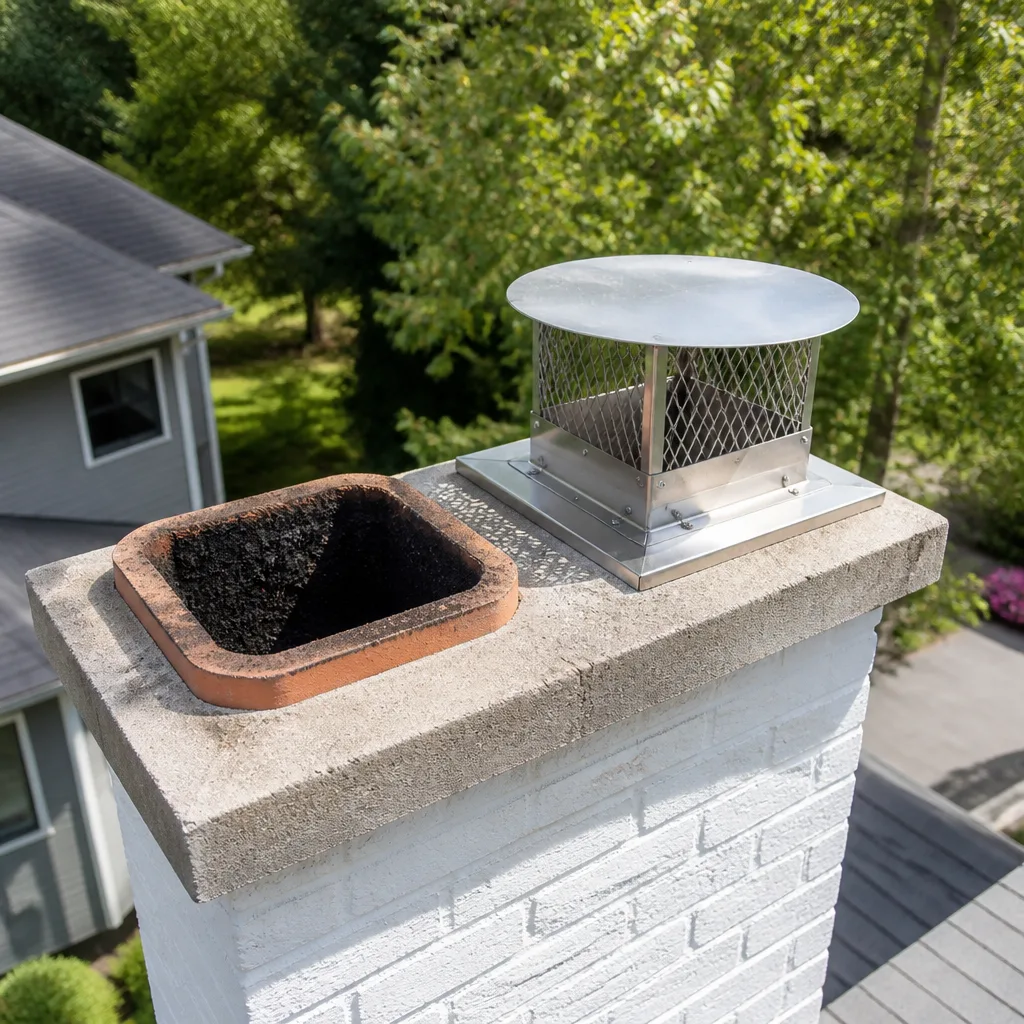 Sweep & inspection
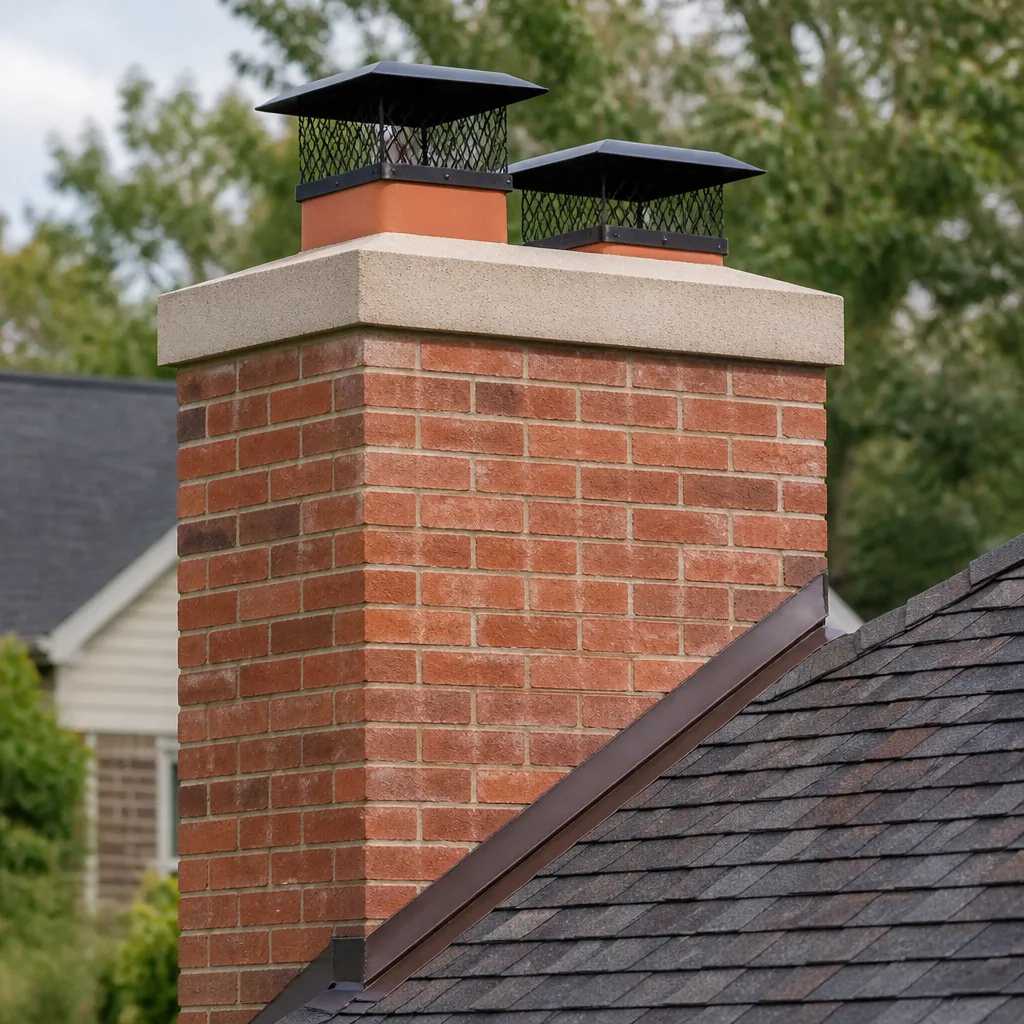 Caps & crowns
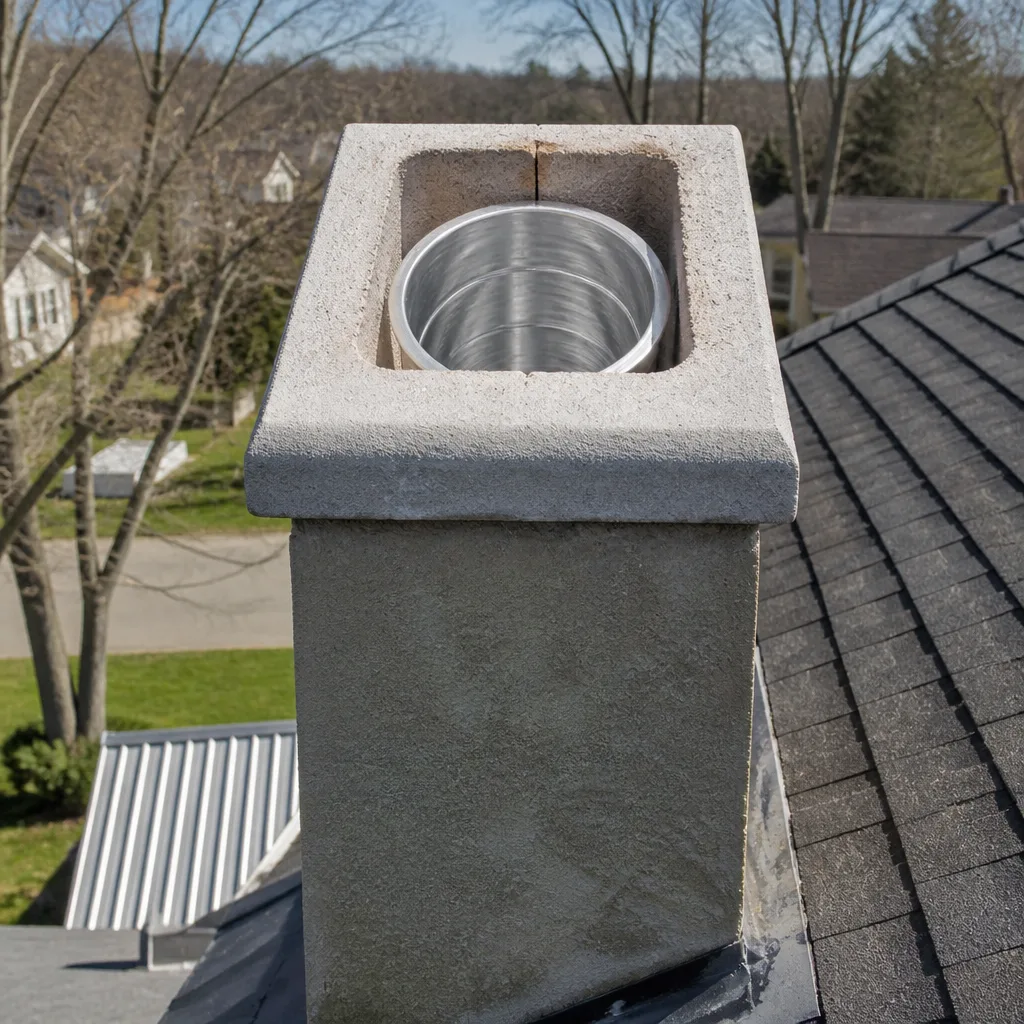 Flue relining
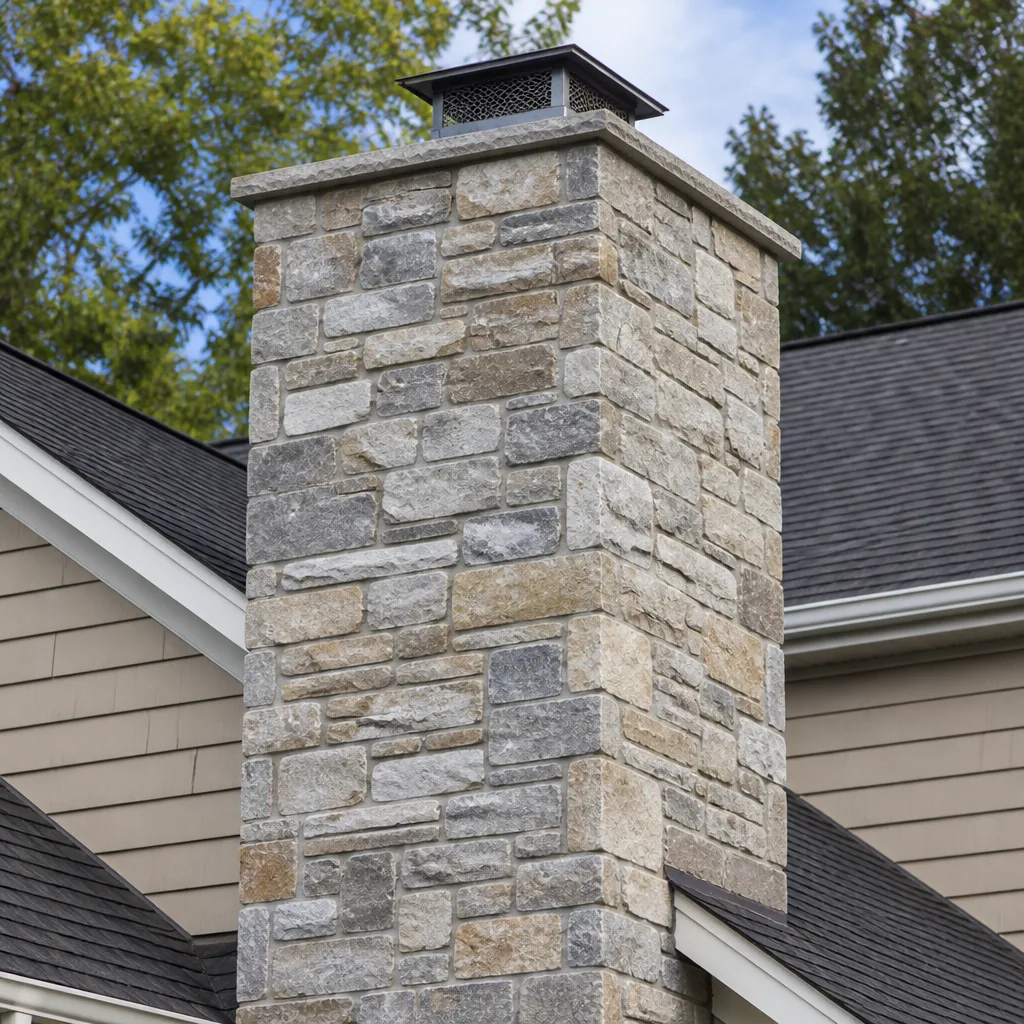 Masonry repair
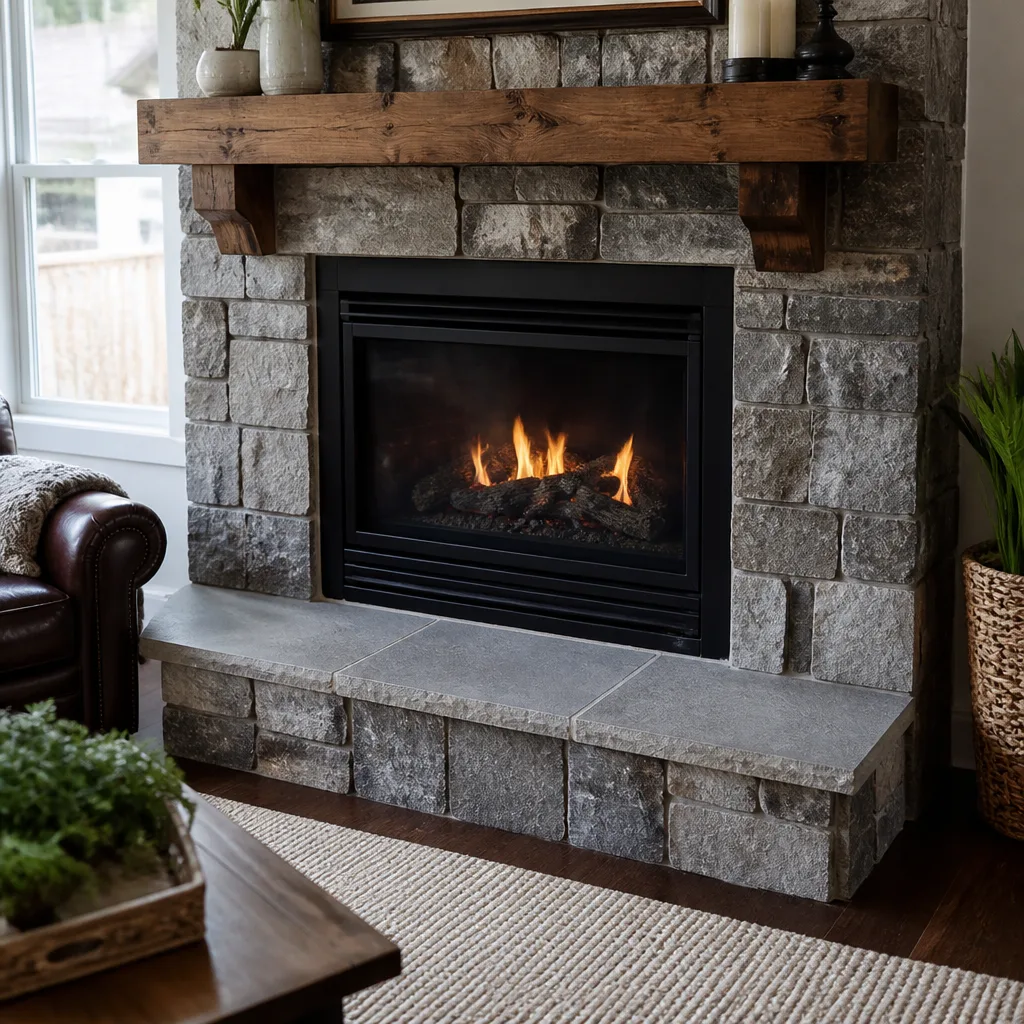 Gas fireplace service
Level 1 sweep and inspection to the NFPA 211 annual standard - flue, crown, cap, and flashing checked and photographed
Chimney sweep logs do not sweep chimneys. They loosen some creosote - which then falls where a brush and vacuum still have to collect it.
Chimney Sweep Troubleshooting in Buena Park: Common Problems and How to Fix Them
Smoke rolling into your living room usually isn’t a dirty chimney. In our experience, most Buena Park homeowners who call us about a smoky fireplace have already swept, or paid someone to sweep, and the problem didn’t go away. That’s the tell. A clean flue that still misbehaves is pointing at something deeper: a draft failure, a cracked liner, a damper that isn’t sealing, or a cap that’s letting the wrong air in. This guide teaches you to read the warning signs correctly before you spend a dime on the wrong fix. You’ll learn how to tell a creosote blockage from a pressure problem, what Southern California’s mild climate actually does to brick and mortar, and which issues you can safely monitor versus which ones need a credentialed technician before your next fire.
Quick Answer
Most chimney problems in Buena Park fall into five buckets: draft and pressure failures, creosote or obstruction blockages, cracked flue liners, damper failures, and water damage to the cap, crown, and masonry. Smoke backing into the room is more often a draft problem than a cleaning problem, and a cracked liner, a failed damper, and a blocked flue can look identical from inside the house. The fix depends entirely on which one you actually have, which is why every job should start with a proper inspection rather than a guess.
Styles & brands we work with
- Sweep & inspection
- Caps & crowns
- Flue relining
- Masonry repair
- Gas fireplace service
Table of Contents
- Creosote Blockage vs. Draft Failure: Telling Them Apart
- What Buena Park’s Mild Climate Actually Does to Chimney Mortar
- Reading the Sound, Smell, and Smoke Patterns
- Why “Just Cleaning It” Can Mask a Code-Violation Condition
- A Decision Tree: What You Can Monitor vs. What Needs a Tech
- Cap and Crown Troubleshooting: The Water Problem Nobody Checks
- Liner Troubleshooting and When Restoration Beats Replacement
- Common Mistakes to Avoid
- When to Call a Professional
Creosote Blockage vs. Draft Failure: Telling Them Apart
This is the single most useful distinction in chimney troubleshooting, and most homeowners never hear it. From the couch, a blocked flue and a negative-pressure house produce the same result: smoke that should be going up and out comes back into the room. But the causes sit at opposite ends of the chimney, and the fixes have almost nothing in common.
A creosote blockage is a physical restriction. Soot and creosote have built up on the flue walls or the smoke shelf until the passage is narrowed enough that exhaust can’t move fast enough. You’ll typically notice it worsening over many fires, not appearing suddenly. A draft failure is a pressure problem: the house is pulling air down the chimney, or the flue isn’t warming fast enough to establish upward flow, or the chimney is short, or the cap is interfering, or the flue is oversized for the firebox. The flue can be spotless and the smoke will still come back.
Here’s how the two behave differently in practice:
- Creosote blockage tends to smoke consistently once the fire gets going, often worse as the fire grows, and the smell is acrid and heavy even when the fireplace is cold. A camera inspection shows the buildup.
- Draft failure often appears in specific conditions: a cold start, a windy day pushing air down the flue, a house that’s tightly sealed with exhaust fans running, or a fire that pulls fine until you turn on the kitchen fan. The flue looks clean.
In a Buena Park home, we’ve seen plenty of both. The point is simple: sweeping fixes one and does nothing for the other. If a sweep doesn’t solve your smoke problem, the smoke was never coming from buildup. That’s when you stop cleaning and start diagnosing the whole system.
What Buena Park’s Mild Climate Actually Does to Chimney Mortar
Buena Park doesn’t punish chimneys with hard winters or snow loads. Our weather is mild for most of the year, and that’s exactly the trap. Chimneys here tend to fail from rare use and thermal cycling, not heavy use.
Think about how a Buena Park fireplace actually gets used. Many homes sit all summer and into fall with the flue cold and the damper shut. Then a cool evening comes, the first fire of the season lights up, and the firebox and lower flue go from ambient to several hundred degrees fast. Then the fire goes out and everything cools back down. That heat-up and cool-down cycle repeats a handful of times a year, unevenly, rather than running steadily all winter. Mortar joints and brick don’t love sudden, infrequent swings. The expansion and contraction stresses the joints, and small cracks open. Those cracks are where water gets in, and once water is in masonry, the cycle speeds up.
What that looks like on a Buena Park chimney:
- Crumbling or sandy mortar joints, especially near the crown and the top few courses where the masonry is most exposed.
- Hairline cracks in the crown, the concrete cap on top of the chimney, letting water travel down into the structure.
- Spalling brick, where the face of a brick flakes or pops off after moisture gets behind it and expands.
- Rust stains or a white chalky bloom on the exterior, both signs of water moving through masonry.
None of this is dramatic. That’s the problem. A Buena Park chimney can look fine from the driveway and still have a compromised crown quietly funneling water into the flue. This is why we treat inspection as the starting point for every job rather than something you do only when there’s a visible issue. If your masonry is sound, we say so and leave it alone.
Reading the Sound, Smell, and Smoke Patterns
Your chimney is telling you what’s wrong if you know what to listen and look for. Two of the most confused problems, a cracked flue liner and a damper failure, behave differently once you pay attention to three things: how it sounds, how it smells, and the pattern of the smoke.
Cracked flue liner
- Sound: A crack or gap in the liner can let air move in ways it shouldn’t, and you may hear a faint whistle, a soft rush of air, or an uneven roar as the fire burns. It won’t sound smooth.
- Smell: Stronger-than-usual creosote or smoky odor lingering in the house long after the fire is out, and sometimes a smell from the flue even when the fireplace is cold.
- Smoke pattern: Smoke that drifts or stalls rather than drafting cleanly up, and a fire that’s harder to keep lit. More seriously, a cracked liner can let heat and combustion gases reach the surrounding wood framing, which is a genuine fire and carbon monoxide risk. This is not a monitor-and-wait problem.
Damper failure
- Sound: The damper is mechanical, so you’ll often hear it: a scrape, a grinding, a clunk, or nothing at all when you move the handle. It may not close flush or may drop open on its own.
- Smell: Cold air and outside smells coming down the flue when the fireplace is closed up, because the damper isn’t sealing. You may smell the house’s other odors when the flue should be shut.
- Smoke pattern: Fine when fully open, but smoke or heat escaping into the room if it won’t stay open, or heat lost straight up the flue if it won’t close.
The pattern differences matter because a stuck-open damper is an efficiency problem and a comfort problem, while a cracked liner is a safety problem. Both need attention, but not on the same timeline. When we inspect a Buena Park chimney, we run a camera down the flue and photograph what we find, so you can see for yourself which one you’re dealing with rather than taking our word for it.
Why “Just Cleaning It” Can Mask a Code-Violation Condition
Here’s a scenario we run into more than we’d like. A homeowner has a smoky fire, calls for a cleaning, the flue gets swept, the smoke problem eases, and everyone moves on. Six months later there’s a bigger problem. What happened is that a sweep cleaned the symptom, not the cause, and in some cases the cleaning hid a condition that should have been documented and fixed.
Chimneys are subject to codes that exist for fire safety. A flue that’s the wrong size for the firebox, a liner with gaps or missing sections, a damaged crown, an unlisted or improperly installed appliance connector, or a chase that doesn’t meet clearance requirements from combustibles are all conditions a licensed inspector is trained to catch and record. When a sweep runs a brush through the flue and leaves, that documentation never happens.
The reason this matters for resale and for your own safety: a code-violation condition that goes undocumented is still a code-violation condition. If you sell the house and a buyer’s inspector finds it, you’re fixing it on someone else’s timeline. Worse, some of these conditions are the exact ones that turn a routine smoky fire into a house fire or a carbon monoxide event.
The right sequence for a smoky fire is:
- Inspect first, with a camera, before any cleaning.
- Document what’s found, with photos.
- Sweep only if there’s buildup to remove.
- Address any structural or code condition the inspection turned up, and get it in writing.
If someone offers to sweep your Buena Park chimney without inspecting it first, or without showing you what’s inside, that’s the contractor to slow down on. A Buena Park Chimney Sweep Pros visit starts with understanding and ends with evidence you can look at.
A Decision Tree: What You Can Monitor vs. What Needs a Tech
Not every chimney problem is an emergency, and not every problem can wait. Here’s a practical way to sort what you’re seeing into two piles: safe to watch, and call now.
Safe to monitor until your next appointment
- A stuck-open damper. It costs you heat and lets cold air in, but it isn’t a fire risk. Note it and have it looked at.
- A missing or loose cap. Get it fixed soon to keep rain, animals, and debris out, but it’s rarely urgent by the day.
- Surface rust or a chalky bloom on the exterior masonry. A sign of water intrusion; schedule an inspection before the next rainy season.
- A smoky fire only on windy days or with an exhaust fan running. Note which conditions trigger it and mention them at inspection. Pressure issues often have house-wide causes.
- Crumbling mortar at the crown. Not a today problem, but one to put on the calendar before water gets deeper into the structure.
Call a credentialed technician before your next fire
- Any sign of a cracked or damaged flue liner. Heat and gases can reach framing. Do not use the fireplace until it’s inspected.
- Smoke backing into the room consistently, especially if a recent sweep didn’t fix it.
- A carbon monoxide alarm sounding near the fireplace or chimney. Open windows, leave the house, call the gas utility or fire department, then call us. Do not light another fire.
- Creosote that looks glassy, slick, or like tar on the flue walls. That’s a higher-grade buildup that’s harder to remove and hotter-burning, and it needs professional attention.
- Any smell of gas from a gas fireplace, or a pilot that won’t behave. Stop using it and have it checked. Gas work is not a homeowner task.
- Visible flame or glowing outside the firebox, or heat where it shouldn’t be. Stop and call.
One caveat worth stating plainly: we never recommend masonry, liner, or crown work you don’t need, and we’re just as comfortable telling you something can safely wait a season. Our technicians have up to 14 years of experience, and they’ll tell you honestly where your Buena Park chimney sits on this list.
Cap and Crown Troubleshooting: The Water Problem Nobody Checks
Most chimney damage we diagnose in Buena Park traces back to water, and the two cheapest things to fix are the two most often skipped: the cap and the crown. A sweep-only company doesn’t touch either. We treat them as their own category of work because that’s what they are.
The chimney cap is the cover on top of the flue that keeps rain, animals, and debris out while letting smoke escape. When it’s missing, bent, or rusted through, water falls straight into the flue and the firebox, and birds and squirrels find their way in. The crown is the concrete slab at the very top of the masonry that sheds water away from the structure. A cracked or crumbling crown is a slow leak directly into the chimney body, which is how spalling brick and rotted mortar start.
What to look for from the ground:
- A cap that’s tilted, dented, rusted, or gone.
- Crown cracks (thin dark lines are the early ones), crumbling edges, or a crown that’s pulled away from the flue.
- Water stains on the ceiling or walls near the chimney, or a damp firebox after rain.
- Rust on the damper or firebox hardware.
We install caps and crowns as a standalone preventive service, not something bolted onto a cleaning as an upsell. We work with brands like Gelco and Olympia Chimney for the parts that need to last in an outdoor setting, and we match the cap to your flue rather than grabbing whatever’s on hand. If your crown is sound and your cap is intact, we’ll tell you to leave them alone.
Liner Troubleshooting and When Restoration Beats Replacement
The flue liner is the layer between the fire and everything around it. When it’s cracked, corroded, or missing sections, gases and heat can escape into the surrounding structure. The good news is that not every damaged liner needs a full replacement, and knowing the difference can save you real money.
We start with a camera inspection to see exactly what the liner looks like. From there, the choice is usually one of three:
- Leave it alone. If the liner is intact and sized correctly for the appliance, no work is needed.
- Restore it. For certain liners with cracking or minor voids, a ceramic flue-resurfacing system can restore the interior without the cost and disruption of a full reline. We install HeatShield for exactly this, and it’s an option many single-service contractors simply don’t have.
- Reline it. For older or non-standard flues where the original liner is gone or too damaged, a flexible liner is often the right material. We install DuraFlex flexible liner systems because they fit the aged and irregular flue shapes that rigid systems can’t address.
The decision isn’t “reline by default.” It’s a matter of matching the right solution to your specific flue. A house in Buena Park with an unusual chase configuration gets a different answer than one with a standard masonry flue. When we recommend a liner repair, we show you the camera evidence, explain why restoration will or won’t work in your case, and give you a written estimate. If a full reline isn’t necessary, we’ll say so.
If your liner problem is paired with a firebox or damper issue, we handle fireplace repair as part of the same visit, so you’re not coordinating two contractors on one chimney.
Common Mistakes to Avoid
- Treating a smoky fire as a cleaning problem. If a sweep doesn’t fix the smoke, assume it never was buildup and get the draft diagnosed. Buena Park homes with tightly sealed windows and modern exhaust fans are prone to pressure problems a brush can’t touch.
- Skipping the cap because “it’s not affecting anything.” A missing cap is how water and animals get in, and it’s one of the least expensive fixes on the chimney. Get it resolved before the rainy season, not after.
- Assuming mild weather means the chimney is fine. Rare use and thermal cycling crack mortar and crowns here more than heavy use does. A chimney that looks fine from the driveway can still have a compromised crown sending water into the structure.
- Letting a cleaning hide a code condition. If nobody inspected before sweeping, nobody documented the violation, and it’s still there. Ask for photos of what’s in your flue, not just a brush and a receipt.
- Burning green or wet wood to “save” on firewood. Damp wood produces more creosote and more smoke, which is the last thing a marginal flue needs. It’s not a money saver when it accelerates buildup.
- Hiring a sweep-only outfit for a structural problem. A generalist handyman isn’t the right call for liner or masonry work. Match the provider to the scope, and ask what brands and materials they work with.
- Ignoring a carbon monoxide alarm near the fireplace. A sounding alarm means stop, open windows, leave, and call for help before you do anything else. Never attribute it to a “bad alarm” and relight.
When to Call a Professional
Some chimney problems are safe to watch and schedule. Others need a credentialed technician before you light another fire. Call a professional if you see a cracked or damaged flue liner, if smoke comes back into the room and a recent sweep didn’t fix it, if your carbon monoxide alarm sounds, if your crown or cap is missing or damaged and water is getting in, if you smell gas near a gas fireplace, or if you see glassy tar-like creosote on the flue walls. Also call if you’ve inherited an older chimney and don’t know its history, or if a previous contractor’s work doesn’t look right and you want a second opinion backed by camera evidence.
Buena Park Chimney Sweep Pros offers free estimates in Buena Park – call (877) 792-7250. We answer 24/7. Fast dispatch from 7am to 7pm, Sunday through Friday. We’ll inspect with a camera, show you what we find, and tell you plainly whether the work can wait or can’t. The written estimate sets the final price, and nothing gets recommended without evidence you can see for yourself.
See the difference
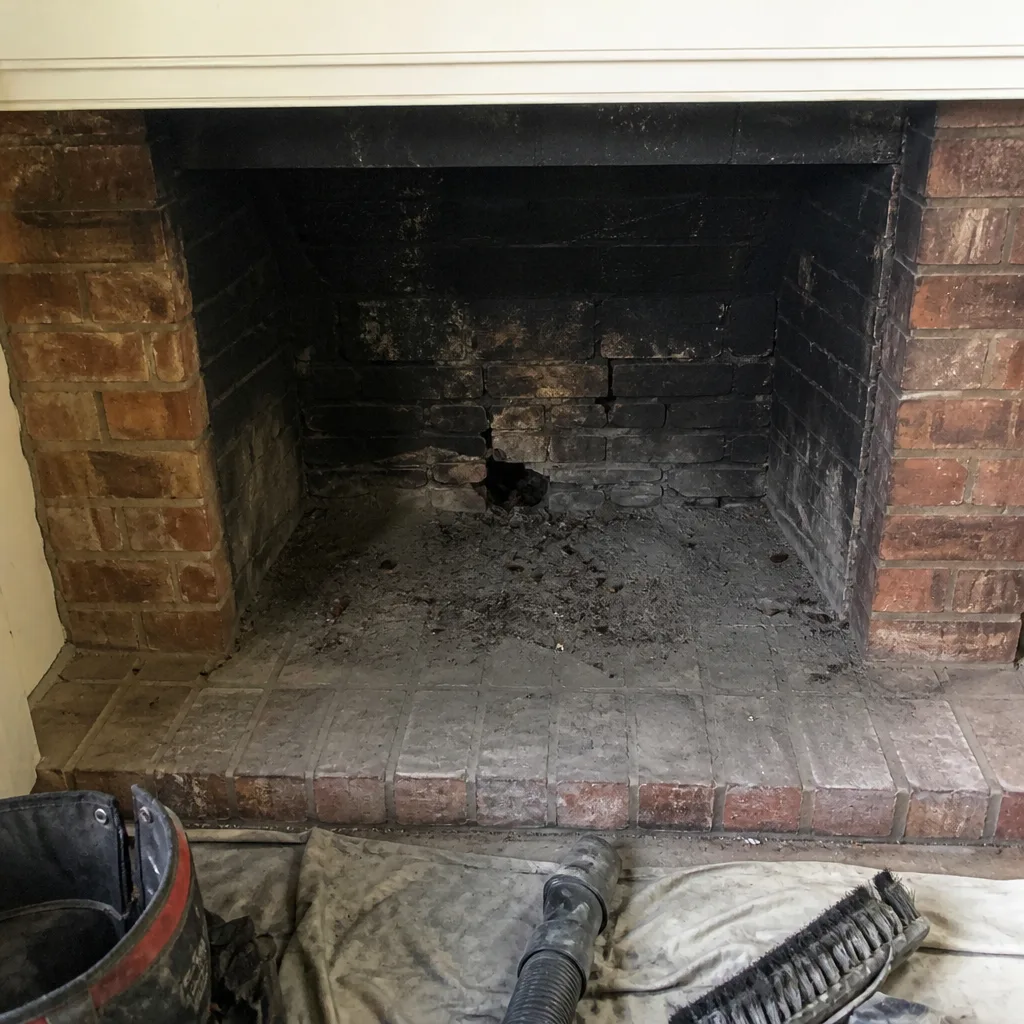 Before
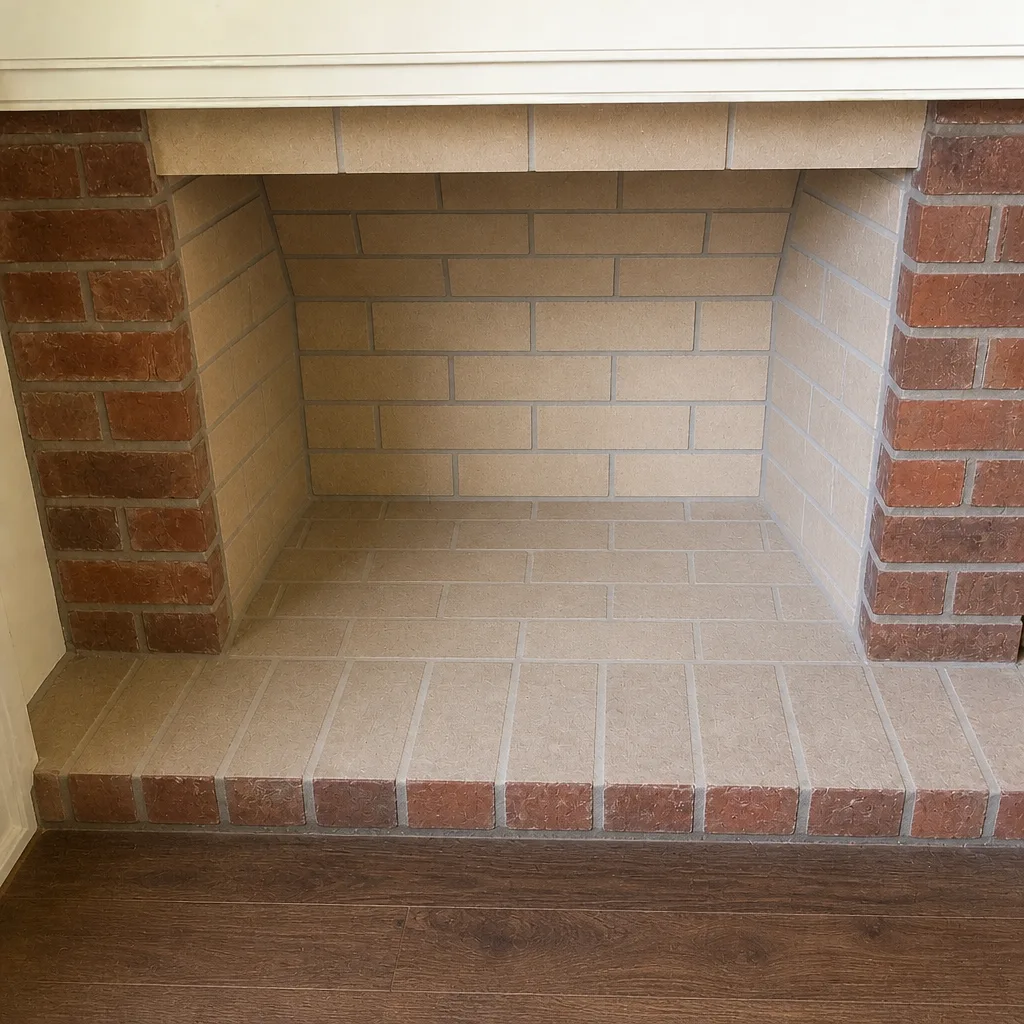 After
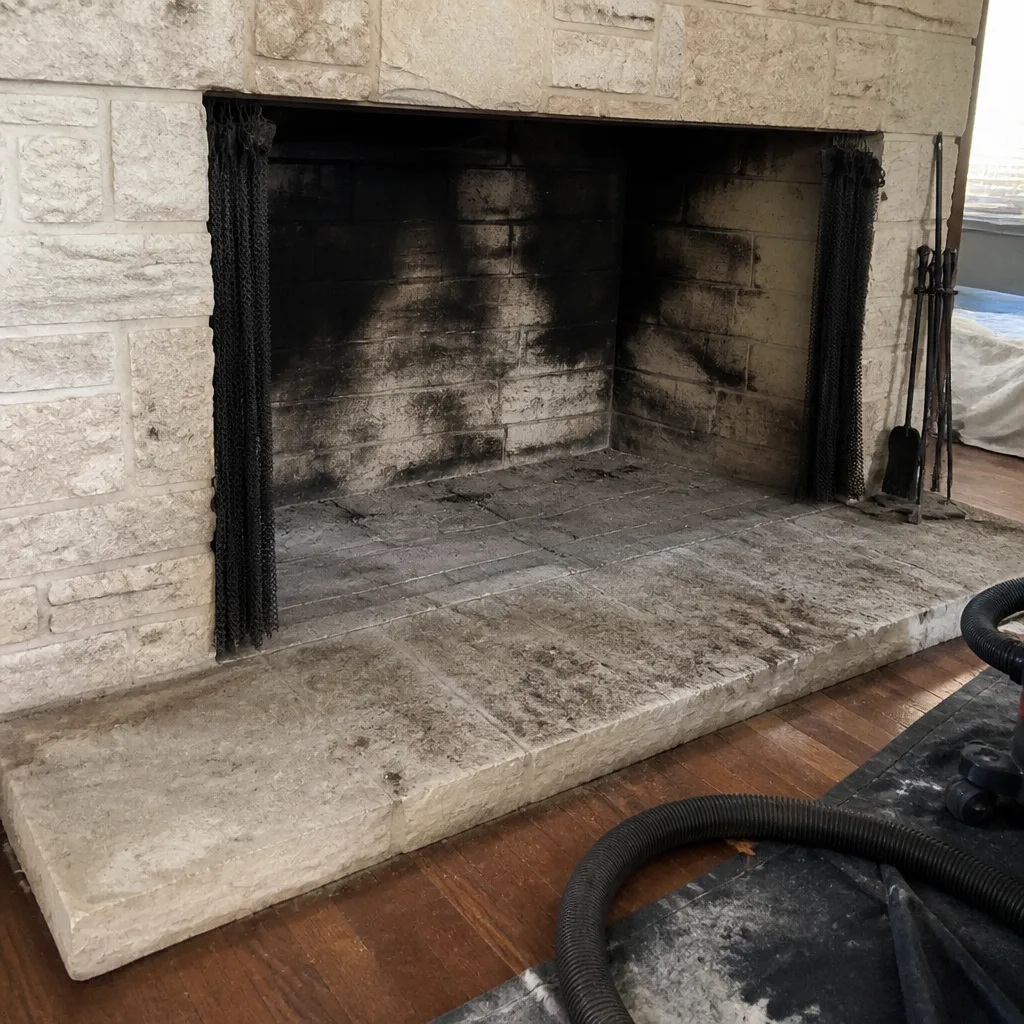 Before
 After
 Before
 After
Frequently Asked Questions
A standard chimney sweep is typically quoted per job after a quick look at your flue, and you get a written estimate before any work is booked. The price depends on the flue’s condition, how much buildup there is, and whether an inspection or cap work is included. Call (877) 792-7250 for an exact quote – estimates are free.
You need a liner repair only if the inspection shows damage or a code condition, and you should never be told so without seeing it. Ask for camera photos of your flue, and ask whether restoration (resurfacing) is an option before full relining. We install both, and we’ll tell you if yours can be restored rather than replaced. Call (877) 792-7250 and we’ll show you what’s in your chimney.
Most wood-burning chimneys are swept when buildup reaches a point that warrants it, which for many Buena Park households means an annual inspection with cleaning as needed based on how much you burn. A gas fireplace needs less sweeping but still benefits from periodic inspection. The right interval depends on your use, so an inspection is the best way to know. Call (877) 792-7250 to book one.
Creosote and soot build up, the flue narrows, draft worsens, and higher-grade creosote becomes a real fire risk. Water from a failed cap or crown gets into masonry and starts spalling and crumbling brick. None of it fails overnight, which is exactly why it’s easy to let slide. The fix is cheaper the earlier it’s caught. Call (877) 792-7250 for an inspection before the next burning season.
Because a sweep only removes buildup, and smoke backing up is often a draft failure rather than a blockage. A flue that’s oversized for the firebox, a house with strong exhaust fans and tight windows, a short chimney, or a cap issue can all push smoke into the room with a perfectly clean flue. That requires diagnosis, not another cleaning. Call (877) 792-7250 and we’ll inspect the whole system, not just the inside of the pipe.
You can, but you shouldn’t leave it that way. A missing cap lets rain, animals, and debris into the flue, which damages the liner and the firebox over time, and an animal nest is a fire hazard. Have it replaced before the next burning season. We install caps as a standalone service; call (877) 792-7250 for a free estimate.
The Bottom Line
Most chimney problems in Buena Park aren’t cleaning problems, and treating them like one wastes money and hides real risk. Learn to separate a creosote blockage from a draft failure, a cracked liner from a stuck damper, and a safe-to-monitor issue from a call-now one. Watch your cap and crown, because water is the quiet killer of Southern California masonry, and thermal cycling from rare use does more damage here than heavy burning ever could. Start every job with an inspection you can see, get your estimate in writing, and don’t let a brush through the flue stand in for a real diagnosis. If something on this list matches what you’re seeing, we’re glad to take a look. For cap and crown work, liner restoration, or a straight answer on a chimney repair, we handle it end to end, and for routine upkeep a chimney sweep with a camera inspection first tells you what your flue actually needs.
A Note on Materials and Trust
When we recommend a material, it’s because it fits your specific flue, not because it’s what we have on hand. We’re authorized to install and work with DuraFlex, HeatShield, Gelco, Olympia Chimney, Famco, and Copperfield, and that range matters for a practical reason: a house with an irregular or aged flue gets a flexible system, a chimney that qualifies for resurfacing gets ceramic restoration, and a standard flue gets a standard solution. One material doesn’t cover every chimney any more than one fix covers every problem.
Our technicians have up to 14 years of experience, and they’ve seen enough Buena Park chimneys to know that the honest answer is sometimes “nothing’s wrong, leave it alone.” We’d rather tell you that than sell you work you don’t need. That’s the whole approach: inspect first, document with photos, recommend only what the evidence supports, and stand behind a single-source job from sweep to cap to structural repair. For an estimate in Buena Park, call (877) 792-7250.
Written by the team at Buena Park Chimney Sweep Pros.